
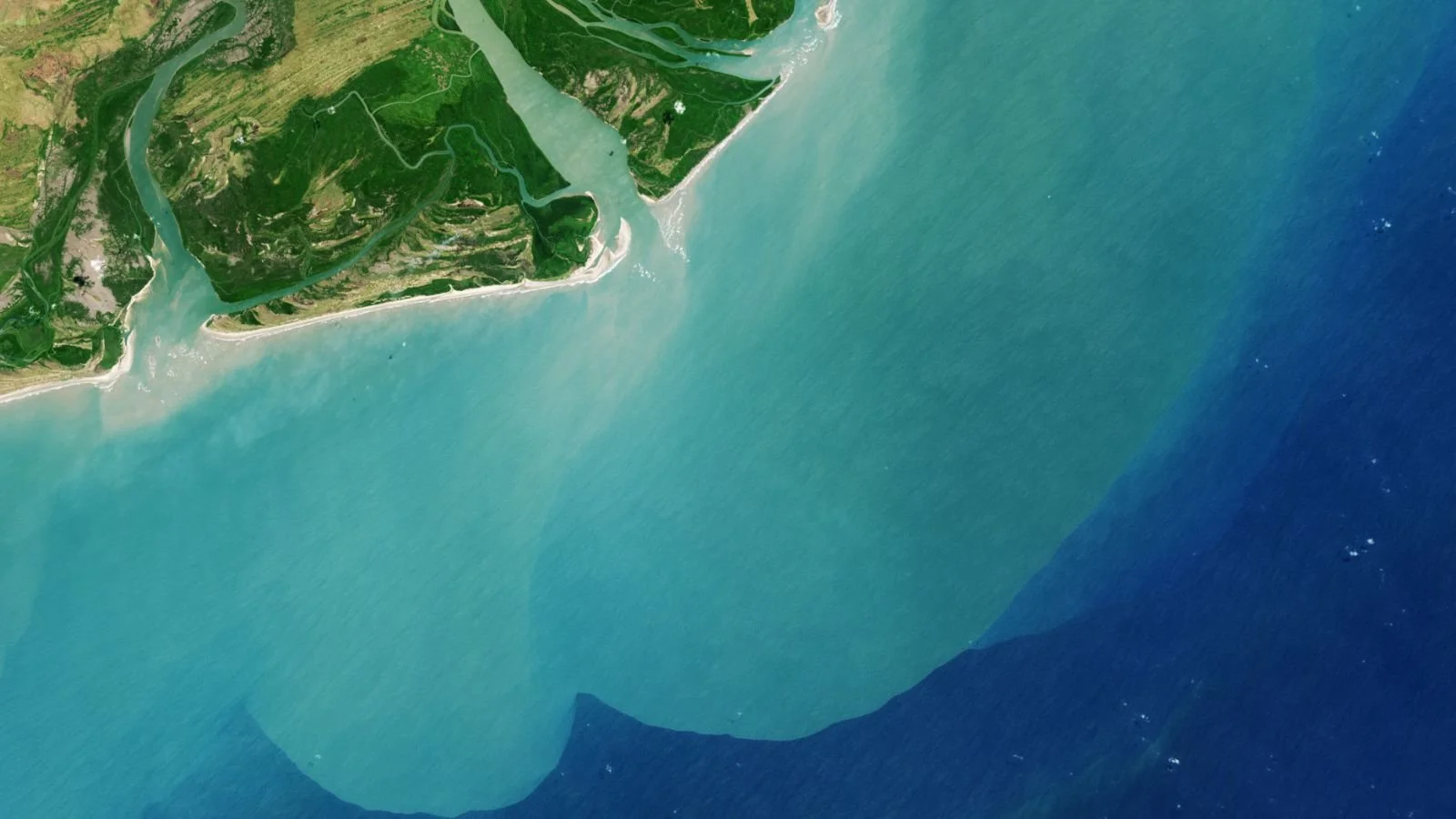
Achieving more resilient and sustainable delta socio-ecological systems
From a Research Hub to a Living Deltas Network
Building on the legacy of the Living Deltas Research Hub, the Living Deltas Network aims to sustain and enrich global collaboration for better delta futures through a long-term, inclusive platform that connects research, policy and practice for delta resilience and sustainability.

Vision
Achieving more resilient and sustainable delta socio-ecological systems, while maximizing livelihood opportunities.
Mission
The Living Deltas Network will be a global leader in inclusive, action-oriented approaches that will drive transdisciplinary research, cutting-edge policy, and locally led innovations to achieve delta resilience and sustainability.
Objectives
Use the extensive evidence base gathered in the Living Deltas Research Hub for South and SE Asian deltas to drive research, policy, action and advocacy for deltas worldwide.
Encourage co-creation and sharing of knowledge to maximize inter-delta learning globally.
Bridge science, policy and practice to drive adaptive governance and decision-making.
With an emphasis on delta communities, strengthen local and regional capacities through training, equitable partnerships and accessible knowledge platforms.
Establish bottom-up working groups to identify thematic areas for prioritization.

Our History
2019-2024
The UKRI GCRF Living Deltas Hub was one of 12 major transdisciplinary projects funded under the £1.5b UK government Global Challenges Research Fund (GCRF), administered by UK Research and Innovation (UKRI). The GCRF was designed to foster interdisciplinary research and innovation to address complex development challenges through equitable partnerships. Between 2016 and 2024 the GCRF funded 140+ programmes with 3000+ grants in 100+ countries involving 12,000+ researchers.
The sheer scale and ambition of the GCRF Hubs was what made them game-changers, enabling them to deliver a coordinated global response to systemic challenges. Hub researchers worked in partnership with governments, NGOs, delta communities, international agencies, and academics.
Between 2019 and 2024, the Living Deltas Hub conducted highly interdisciplinary research in and across the natural & physical sciences, the arts & humanities, and the social sciences. By the end of its UKRI funding period, Living Deltas partners had risen to over 90 collaborating organisations and the Hub comprised over 200 people from many different countries.
For the GBM Delta (India and Bangladesh) and the Red River and Mekong River deltas in Vietnam, the Living Deltas Hub produced cutting edge-research and engagement in five ‘outcome domains’: (1) ecosystem conservation and restoration, (2) disaster risk reduction and management, (3) livelihood diversification and adaptation, (4) capacity strengthening of delta communities and (5) delta community resilience and well-being.
In its 5-year GCRF funding period Living Deltas produced over 300 academic papers, held over 300 substantive engagement events of which two-thirds were international, received almost 80 external awards and was directly associated with over £32 million of further funding. For more information see the Hub 5-year report. We are continuing and expanding this work through the Living Deltas Network.
Join us.
Thematic Areas & Activities



RESEARCH
Advance transdisciplinary and collaborative research across global delta systems to generate knowledge for resilient, equitable, and sustainable delta futures.

Monitoring and modelling delta SES
Maintain and expand delta water monitoring networks and standardized indicators.
Investigate ecosystem responses to pollution, salinity, and land-use change.
Apply resource flow and ecosystem modelling to guide restoration and sustainable use.
Assessing resilience to natural hazards and climate change
Study linkages between natural hazards, ecosystem degradation, food systems and livelihood security to analyze delta tipping points, triggers and thresholds.
Assess gendered and social dimensions of climate and disaster risks, migration, health, and nutrition.
Implement participatory research to generate evidence on community-level adaptive capacities.
Sustainable economy and livelihoods
Conduct research on climate-smart agriculture and aquacultural practices and livelihood diversification.
Develop sustainable agriculture and aquaculture models integrating environmental management and ecosystem conservation.
Analyze trade-offs between economic growth, equity, and delta ecosystem integrity.
ACTION
Translate science into locally grounded, community-led, interventions and innovation for ecosystem restoration, livelihood improvement, and resilience building.

Promote sustainable ecosystem management
Design and test Nature-based Solutions and ecosystem-based adaptation interventions co-designing these with local stakeholders and communities.
Pilot salinity assessment and management, nutrient recycling, and pollution reduction techniques.
Develop delta-specific water-ecosystem-livelihood restoration models.
Resilient livelihoods and food systems
Pilot innovative, inclusive, and sustainable agriculture, aquaculture and tourism practices.
Engage women and youth in livelihood diversification and climate-smart agriculture.
Implement participatory research to generate evidence of community-level disaster preparedness and livelihood adaptation strategies.
Community-led disaster preparedness and climate adaptation
Develop and implement decision-support mechanisms and tools to support community-led disaster risk reduction and adaptation strategies.
Design and pilot grey-green infrastructure, mangrove and wetland restoration to enhance coastal protection and biodiversity.
POLICY
Bridge research and practice with governance to co-develop policies that promote sustainable, inclusive, and climate-resilient deltas.

Integrated delta governance and assessment
Use the DeLTAS toolkit to identify knowledge gaps, track progress toward sustainability targets, and inform adaptive management strategies.
Develop policy dialogue to co-create recommendations based on monitoring and sustainability assessments.
Strengthen institutional and community-level mechanisms for water and land-use governance.
Coastal planning and resource management
Facilitate participatory coastal zoning to ensure equitable resource access.
Design and advocate for policy incentives supporting sustainable agriculture and aquaculture practices.
Support policymakers in aligning national adaptation plans, SDG targets, and other delta strategies with local realities.
Policy innovation
Use Living Deltas Research Hub and the Living Deltas Network-generated data and knowledge to inform ecosystem management, livelihood sustainability and adaptation.
Organize policy dialogues connecting local authorities, regional agencies, and research partners towards shared objectives.
Use our evidence-base to co-create guidelines, manuals and toolkits to support policy design and plan programmes for delta resilience and sustainability.
KNOWLEDGE MANAGEMENT
Connect and empower researchers, practitioners, and policymakers to co-produce, share, and apply delta knowledge for transformation.

North–South and South–South collaboration
Facilitate international research partnerships and exchange programmes.
Build regional research nodes for delta science and innovation.
Provide small grants and training for early career and community-based researchers.
Capacity building & training
Deliver workshops on data platforms and assessment tools.
Develop gender- and culture-sensitive training materials around key issues relating to delta resilience and sustainability.
Foster communities of practice across deltas emphasizing continuous learning.
Knowledge dissemination & advocacy
Develop open-access knowledge products including reports, policy briefs, technical notes and interactive data dashboards.
Host policy dialogues, conferences, and global delta forums.
Advocate for equitable recognition of community and voluntary contributions to delta resilience and sustainability.


